 By Caleb Morgan
Updated November 2026
Garden tools for tilling loosen compacted soil, mix in compost and prepare beds for planting without renting a gas machine. The right pick depends on how big your beds are, how hard your soil packs down and how much bending or pushing you can comfortably do. The five tools below were selected from product listings, manufacturer specifications and common owner feedback about weight, tine design, handle length and durability. Each one suits a different kind of gardener.
Our top picks at a glance
- 1
 TOP CHOICEBest overallHand Tiller for Gardening, Manual Twist Tiller CultivatorView on Amazon
- 2
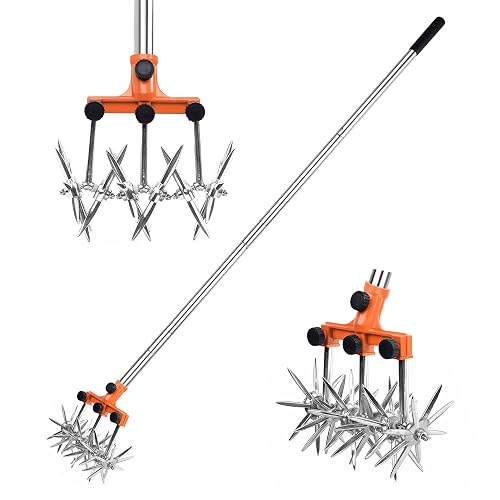 TOP CHOICEBest for long-handled, low-bend workRotary Cultivator Garden Rotary Tiller Hand TillerView on Amazon
- 3
 TOP CHOICEBest for breaking hard, rocky soilManual Hand Tiller Cultivator, Large Steel ClawView on Amazon
- 4
 Best for tilling and hoeing in one toolGarden Hoe and Cultivator, Long Heavy Duty Hand Hoe with TillerView on Amazon
- 5
 Best for adjustable reachAdjustable Stainless Steel Long Handle Manual CultivatorView on Amazon
Our Top Picks
Quick Comparison
| Product | Best for | Key feature |
|---|---|---|
| Hand Tiller for Gardening | Overall use in beds | Heavy-duty twist head |
| Rotary Cultivator Garden Rotary Tiller | Low-bend work | 57-inch adjustable poles |
| Manual Hand Tiller Cultivator | Hard, rocky soil | Large steel claw |
| Garden Hoe and Cultivator | Tilling and hoeing | Two-section handle |
| Adjustable Long Handle Cultivator | Adjustable reach | Sturdy metal tines |
Hand Tiller for Gardening, Manual Twist Tiller Cultivator
Hand Tiller for Gardening, Manual Twist Tiller Cultivator, Heavy Duty Garden Claw, Soil Loosener & Lawn Aerator for Soil Mixing, Garden, Flower Box and Raised Bed
Best for: overall use in beds
This suits gardeners with raised beds, flower boxes and small garden plots who want one tool for loosening soil and mixing in amendments.
Pros
- Twist action breaks up soil without heavy lifting.
- Heavy-duty head is built for repeated use in dense soil.
Cons
- Requires bending, so it is less comfortable for long sessions.
Rotary Cultivator Garden Rotary Tiller Hand Tiller
Rotary Cultivator Garden Rotary Tiller Adjustable Stainless Steel Poles Hand Tiller for Soil Mixing or Reseeding Grass Lawn Tiller Total Length 57 Inch
Best for: low-bend work
Gardeners who have trouble bending or kneeling, or who need to reach the middle of a wide bed, will find the long poles useful.
Pros
- Total length of about 57 inches keeps you upright while working.
- Adjustable stainless steel poles allow a custom fit.
Cons
- Long poles are harder to control in tight, crowded beds.
Manual Hand Tiller Cultivator, Large Steel Claw
Manual Hand Tiller Cultivator, Large Steel Claw, Long Handle Mattock, Loosens Garden Soil, For Plant Boxes & Flower Beds Walensee Twist Tiller with Large Steel Claw for Garden Soil Loosening
Best for: breaking hard, rocky soil
This fits gardeners dealing with packed clay or ground that has not been worked in years, where a wider claw makes a real difference.
Pros
- Large steel claw bites into compacted ground.
- Long handle reduces strain on the lower back.
Cons
- Heavier than smaller hand tillers, which can tire the wrists.
Garden Hoe and Cultivator, Long Heavy Duty Hand Hoe with Tiller
Garden Hoe and Cultivator, Long Heavy Duty Hand Hoe with Tiller, 2 Section Handle, Carbon Steel Blade, Cultivator Hoe Garden Tools for Loosening Soil, Digging
Best for: tilling and hoeing in one tool
Gardeners who want to switch between loosening soil and chopping weeds without changing tools will find this a practical choice.
Pros
- Carbon steel blade handles both digging and cultivating.
- Two-section handle makes storage easier.
Cons
- The blade side is less effective than a dedicated tiller in very dense soil.
Adjustable Stainless Steel Long Handle Manual Cultivator
Adjustable Stainless Steel Long Handle Manual Cultivator for Gardening, Loosing and Mixing Soil, Reseeding Grass, Garden Beds Rotary Cultivator, Hand Tiller Garden Tool with Sturdy Metal Tines
Best for: adjustable reach
This suits gardeners of different heights who share tools, or who want to adjust the handle length for different beds.
Pros
- Adjustable stainless steel handle fits a range of body heights.
- Sturdy metal tines hold up to repeated soil mixing.
Cons
- Adjustment collars can loosen over time if not checked.
Buying Guide
Handle Length and Reach
Measure your height and how far you need to reach into a bed. Longer handles around 50 to 60 inches reduce bending, while shorter handles give better control in tight raised beds.
Tine or Claw Design
Wider, sturdier tines or a large steel claw break up compacted soil more effectively. Narrower tines work better for loosening soil between existing plants.
Head Material and Construction
Look for carbon or stainless steel heads with welded or riveted joints. Manufacturers typically specify the steel grade, and heavier gauge metal resists bending in hard ground.
Weight and Balance
A lighter tool is easier to use for long sessions, but very light tools may not penetrate dense clay. Hold the tool before buying if you can, and check that the weight sits comfortably in your hands.
Good picks for this: Hand Tiller for Gardening and Manual Hand Tiller Cultivator
FAQ
Can I use these garden tools for tilling on hard, compacted clay?
Most of these tools can handle compacted clay if you work the soil when it is slightly moist rather than bone dry or soaking wet. Expect to make several passes and loosen the ground in sections instead of trying to break it all at once. Adding compost over time will make future tilling noticeably easier.
Do I need a manual tiller if I only have a small raised bed?
A hand tiller or cultivator is usually the better fit for small raised beds and flower boxes because it gives you precise control and is easy to store. Larger tools with long handles can feel awkward in tight spaces. Choose a shorter-reach option if your beds are narrow or close to walls.
How deep should I till before planting?
For most vegetable and flower beds, loosening the top 6 to 8 inches of soil is a good target. Go a little deeper only if you are preparing a new bed or breaking up hardpan. Avoid overworking the soil, since excessive tilling can damage its structure and soil life.
Is a rotary cultivator the same as a rotary tiller?
In general use, a rotary cultivator is a manual tool with rotating tines that you push or twist into the soil, while a rotary tiller usually refers to a powered machine. The manual version is lighter and quieter, which suits small gardens. It works best for loosening soil and mixing in amendments rather than breaking new ground.
How do I keep these tools in good shape?
Wipe off soil after each use and let the tool dry before storing it to prevent rust, especially on steel tines and blades. Check bolts and handle connections periodically and tighten them if needed. A light coat of oil on metal parts during the off-season helps extend their life.
Are these tools suitable for reseeding a lawn?
Several of the options can loosen the top layer of soil enough to help grass seed make contact with the ground. For reseeding, work the soil lightly, then rake and firm the surface before spreading seed. Heavier tilling is not necessary for patchy lawn areas.
Conclusion
If you want one dependable all-around tool for mixed beds and general soil prep, the best overall pick is a good starting point for most home gardeners. Those with larger plots or who want to avoid bending should look at the long-handled options, while gardeners with small raised beds will likely prefer a compact hand tiller or claw.
Match the tool to your bed size, soil type and physical comfort, and you will spend less time working and more time planting. Any of the five can make a real difference when chosen for the right yard.
Before you buy: helpful guides
Related reading
- 5 Best DeWalt Cordless Garden Tools for Pruning and Tilling (2026)
- Garden Tool Storage Guide: Racks, Sheds and Walls
- Essential Garden Tools for Beginners
- Battery vs Gas vs Corded Garden Tools
About Caleb Morgan
Caleb Morgan is part of our editorial team and reviews and edits our garden hand tools & equipment guides, checking product details against manufacturer specifications and owner feedback.