 By Caleb Morgan
Updated November 2026
The Echo PB-2620 is a handheld gas leaf blower built around a 25.4 cc two-stroke engine, aimed at homeowners who want more air volume than a typical electric blower can deliver. If you are weighing an echo leaf blower gas model for a medium-sized lot with mixed debris, this handheld unit makes sense. It suits people who clear driveways, patios and lawn edges several times a season and are comfortable mixing fuel and doing routine maintenance. It is a weaker choice for anyone with a small courtyard who wants quiet, low-maintenance operation, or for buyers who do not want to deal with pull-starting and two-stroke fuel mixing at all. Renters with limited storage, or people who only blow a few leaves in fall, will often be better served by a corded or battery model.
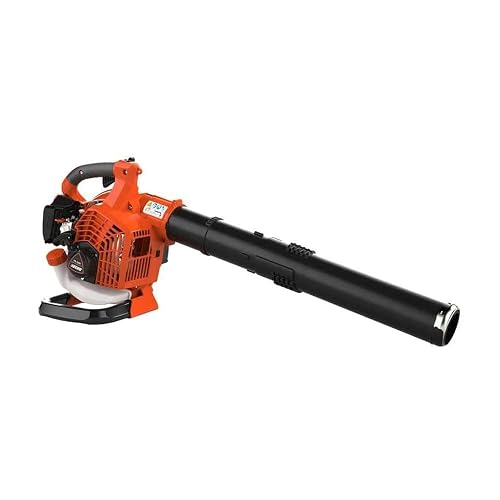
ECHO 172 MPH 456 CFM 25.4 cc Gas 2-Stroke X Series Handheld Leaf Blower PB-2620
Product Overview
The PB-2620 is a handheld gas leaf blower from Echo, a brand that makes a large share of the commercial and residential two-stroke equipment sold in the United States. The listing name describes it as a 172 mph, 456 CFM blower with a 25.4 cc gas two-stroke engine in the X Series line. Echo positions the X Series as its lineup of lighter, handheld-oriented machines, which makes this unit a practical middle ground between a basic residential blower and a larger backpack model.
Handheld gas blowers like this one are typically chosen for jobs that involve moving debris across hard surfaces and out of beds and corners. They carry enough air to move wet leaves and grass clippings, but they are heavier to hold for long stretches than electric units. Owners who run one for an hour or more at a time usually notice arm and wrist fatigue sooner than they would with a backpack design, which is worth keeping in mind before you buy.
If you are still deciding whether a gas model is the right category, our overview of Gas Powered Leaf Blower Guide: Choosing and Using One (2026) covers the basic tradeoffs in noise, emissions, maintenance and power. For a handheld specifically, the guide 6 Best Handheld Gas Leaf Blowers for Yard Cleanup (2026) puts this kind of unit in context with other models.
Key Features & Specifications
The table below lists only the specifications stated in the product name. Where manufacturers publish additional figures such as weight or fuel capacity, check the current Echo documentation for the exact numbers, since they can change between production runs.
| Specification | Echo PB-2620 (as listed) |
|---|---|
| Model | PB-2620 |
| Type | Handheld gas leaf blower |
| Engine displacement | 25.4 cc |
| Engine cycle | 2-stroke |
| Fuel | Gasoline mixed with two-stroke oil |
| Air speed | 172 mph |
| Air volume | 456 CFM |
| Series | Echo X Series |
Two-stroke engines of this displacement class are generally started with a pull cord and a primer bulb, and they require a fuel-and-oil mixture rather than straight gasoline. Echo specifies a mix ratio for its two-stroke equipment, and owners should follow the ratio printed in the owner’s manual exactly, using fuel that is fresh and stored in an approved container.
Pros & Cons
Pros
- Air volume of 456 CFM is strong enough for wet leaves, grass clippings and loose mulch on driveways and walkways.
- Air speed of 172 mph gives a focused stream that helps dislodge debris from cracks and along fence lines.
- A 25.4 cc two-stroke engine offers the power-to-weight profile expected from a handheld gas blower.
- No need for a cord or battery swap, so it works well on large lots and in areas without nearby outlets.
- Echo’s dealer network and parts availability are widely cited by owners as a reason to buy the brand.
Cons
- Two-stroke operation means mixing fuel and oil, and skipping that step causes engine damage.
- Gas engines are louder and produce exhaust, which matters in dense neighborhoods and for early-morning use.
- Handheld operation means sustained arm and wrist effort during long sessions compared with backpack designs.
- Pull-start can be tiring, and cold starts sometimes take several pulls with the choke set correctly.
- Routine maintenance such as spark plug checks, air filter cleaning and fuel system care is required.
Performance Analysis
On paper, 456 CFM is the number that matters most for cleanup tasks. Air volume determines how much material moves per pass, while air speed determines whether the stream can lift debris that is stuck or damp. The 172 mph figure suggests the PB-2620 can break loose compacted leaves in gutters and under shrubs, though results depend on how the nozzle is held and how deep the material is packed. Owners of comparable Echo handhelds commonly report that clearing a standard suburban driveway takes a few minutes with the throttle at mid-range, and that wet leaves are noticeably harder to move than dry ones at any setting.
Two-stroke engines of this size tend to deliver their peak output at higher throttle settings, and owners frequently describe the blower as most effective when run wide open for short bursts rather than held at low speed for long periods. This has a practical effect: fuel use rises under heavy throttle, and the operator will feel more vibration and noise. Keeping the air filter clean and the spark plug in good condition helps the engine hold consistent power, and many owners report that a worn filter or stale fuel is the most common reason a unit feels underpowered.
Noise is the other performance factor to weigh. Gas handhelds in this class are noticeably louder than battery or corded blowers, and while the engine is not unusually loud for its category, neighbors may still notice it. Hearing protection is a sensible habit for any gas blower, and many owners pair the PB-2620 with a schedule that avoids early mornings and weekends. For more on the trade-offs of this category, see Gas Power Leaf Blower Guide: How to Choose, Start and Maintain One.
Who Should Buy This Product?
The PB-2620 is a sound choice for homeowners with a yard of roughly a quarter acre or more, especially if the property has long driveways, gravel paths or wooded edges that collect heavy debris. It also suits people who value running time without recharging or hunting for an outlet, and who are comfortable with basic small-engine care. Landscapers doing light residential work sometimes choose handheld gas models for quick jobs, though commercial users typically step up to backpack units for full days.
You should skip this blower if your cleanup is limited to a small patio or a few fall leaf drops, if you live in a unit where noise or exhaust is a concern, or if you strongly prefer no maintenance at all. A corded or battery alternative will serve those needs with less fuss. If you are comparing it with a backpack model, Backpack Leaf Blower Echo: A Step-by-Step Guide for Buyers and Owners explains when the extra weight distribution of a backpack is worth it.
Buying Guide
When evaluating any gas leaf blower, start with the job you do most often. Clearing wet, matted leaves from a large lawn calls for more air volume than sweeping dry debris from a deck, so match the CFM figure to your typical material. Then consider weight. A handheld gas blower can feel comfortable for ten minutes and tiring after thirty, so try to hold a similar model in a store if you can, or read owner reports on how long users typically run it.
Next, think about starting and fuel. Two-stroke units require premixed fuel, so you will need a measuring container and a dedicated two-stroke oil. Four-stroke engines avoid mixing but usually cost more and weigh more. Look at how easy the primer bulb and choke are to reach, and whether the manufacturer’s manual lists a clear starting procedure. Finally, check the dealer network near you for service, since two-stroke engines benefit from local repair support.
Several well-known alternatives are worth comparing. The Husqvarna 150BT is a backpack gas blower with a 51 cc, 2-cycle engine and an ergonomic harness, suited to larger properties where long sessions are common.

HusqvarnaLeafblower for leaf removal featuring back pack blower, 2-Cycle, 270-MPH and ergonomic harness, Model 970466901 150BT Gas Backpack Leaf Blower, 51-cc 2.16-HP 2-Cycle
For a lighter handheld option, the 25.4 cc, 2-cycle handheld gas blower rated at 432 CFM and 180 mph is another direct comparison. Its listing emphasizes a one-handed design, low vibration and simple pull start for lawns, driveways and patios.

10 lb one-handed design, low vibration, simple pull start, and easy handling for lawn, yard, driveway, and patio cleanup. 25.4cc 2-Cycle Handheld Gas Powered Leaf Blower 432 CFM 180 MPH
If you want to see how the Echo handheld compares with other entry-level gas models, our roundup 6 Best Gas Leaf Blower Handheld Models for Yard Cleanup (2026) covers several options in the same category.
FAQ
Does the Echo PB-2620 require a special fuel mix?
Yes. As a two-stroke engine, it runs on gasoline mixed with two-stroke oil at the ratio specified in Echo’s owner’s manual. Use fresh fuel and a dedicated two-stroke oil, and never run it on straight gasoline.
How much air volume does this blower produce?
The product name lists 456 CFM and 172 mph. These are the manufacturer’s stated figures, and actual performance varies with throttle setting, nozzle position and the type of debris.
Is this blower good for wet leaves?
Owners generally find it handles wet leaves better than electric blowers of similar size, but wet, matted material is harder to move than dry leaves at any throttle setting. Working in sections and using full throttle for short bursts usually helps.
How loud is a gas leaf blower like this one?
Gas handhelds are louder than corded or battery models. Hearing protection is recommended during use, and checking local noise rules before early-morning or weekend operation is a good idea.
Is it difficult to start?
Most owners start it with the choke engaged, a few primer bulb presses and a series of pulls. A cold engine usually takes more effort than a warm one. Keeping the spark plug and air filter clean makes starting noticeably easier.
How often does it need maintenance?
Plan to check the air filter, spark plug and fuel lines regularly, and clean or replace components as the owner’s manual directs. Fuel stored for long periods can cause starting problems, so draining or using fuel before storage is a common recommendation.
Can I use it for commercial work?
It is designed as a handheld unit suited to residential and light-duty tasks. Heavy daily commercial use usually calls for a backpack model with a larger engine, which handles long shifts more comfortably.
Final Verdict
The Echo PB-2620 is a capable handheld gas blower for homeowners with larger yards who want strong air volume and do not mind two-stroke maintenance. Its 456 CFM and 172 mph ratings put it well ahead of basic electric models for wet leaves and heavy debris, while the trade-offs in noise, weight and upkeep are real and should be weighed honestly. If those trade-offs fit your property and habits, it is a solid choice. If not, a corded, battery or backpack alternative may suit you better.
Related reading
About Caleb Morgan
Caleb Morgan is part of our editorial team and reviews and edits our garden hand tools & equipment guides, checking product details against manufacturer specifications and owner feedback.


Write Your Review
No reviews yet. Be the first to share your experience!