 By Caleb Morgan
Updated November 2026
Dull pruners crush stems, dull loppers tear bark, and a dull shovel edge takes twice the effort to do the same job. A good tool for sharpening garden tools fixes that in a few minutes, but the right sharpener depends on what you own and how you use it. This list compares six options, from handheld pocket sharpeners to diamond stones and a multi-blade system. Each pick was assessed against blade types it handles, abrasive quality, ease of use for home gardeners, and recurring owner feedback about edge quality and durability.
Our top picks at a glance
- 1
 TOP CHOICEBest overallCorona Tools Handheld Garden Tool Sharpener– Blade Sharpener for PruniView on Amazon
- 2
 TOP CHOICEBest for multi-blade sharpeningSharpens Axes, Pruning Shears, Hedge Shears & Pocket Knives – CompactView on Amazon
- 3
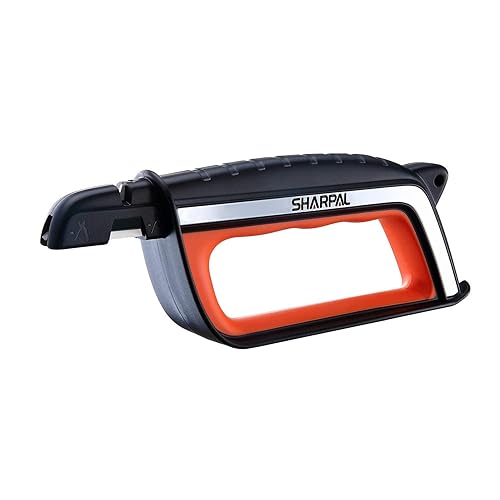 TOP CHOICEBest for mixed tool setsAxe, Hatchet, Machete, Pruner, Hedge Shears, Scissors, Gardening SharpView on Amazon
- 4
 Best for heavy garden toolsFor Knife, Pruners, Loppers, Hedge Shears, Scissors, Axe, Hatchet, MacView on Amazon
- 5
 Best for hand-stone controlCoarse 325 / Extra Fine 1200 Grit, Knife Sharpener For Lawn Mower BladView on Amazon
- 6
 Best for shovels and hoesAccuSharp Garden Tool Sharpener, Diamond-Honed Tungsten Carbide BladesView on Amazon
Our Top Picks
Quick Comparison
| Product | Best for | Key feature |
|---|---|---|
| Corona Tools Handheld Garden Tool Sharpener | Pruning shears and loppers | Compact handheld design with a built-in guide |
| Orange Ninja 7-in-1 Garden Tool & Knife Sharpener | Mixed blades including pocket knives | Seven sharpening slots in one body |
| SHARPAL 103N All-in-1 Knife Garden Tool Lawn Mower Blade Sharpener | Gardeners with a broad tool collection | Multiple blade-angle slots for garden and kitchen edges |
| SHARPAL 129N Multipurpose Garden Tool Blade Sharpener | Axes, hatchets and heavy loppers | Larger body for stable, controlled strokes |
| SHARPAL 121N Dual-Grit Diamond Sharpening Stone Garden Tool File | Hand-controlled sharpening with a file | Coarse and extra-fine diamond surfaces |
| AccuSharp Garden Tool Sharpener | Shovels, hoes and scythes | Tungsten carbide blades for fast edge restoration |
Corona Tools Handheld Garden Tool Sharpener– Blade Sharpener for Pruning Shears, Loppers, Hedge Clippers & More
Corona Tools Handheld Garden Tool Sharpener– Blade Sharpener for Pruning Shears, Loppers, Hedge Clippers & More
Best for: Pruning shears and loppers
This is a good fit for gardeners who mainly maintain pruners and hand loppers and want a sharpener that fits in a pocket or apron. It suits a regular seasonal routine rather than heavy restoration work on badly damaged edges.
Key specs
- Handheld, compact body
- Designed for pruning shears, loppers and hedge clippers
Pros
- Easy to carry to the garden
- Simple one-motion use with little setup
- Works well for routine touch-ups between cleanings
Cons
- Not ideal for large shovel or axe edges
- Limited for badly nicked blades that need heavy stock removal
Bottom line: Choose this if you want a quick, portable sharpener for pruners and loppers and you sharpen often enough to keep edges maintained.
Sharpens Axes, Pruning Shears, Hedge Shears & Pocket Knives – Compact Multi-Tool Sharpener for Garden, Outdoors & EDC Orange Ninja 7-in-1 Garden Tool & Knife Sharpener- One Tool for Every Blade
Sharpens Axes, Pruning Shears, Hedge Shears & Pocket Knives – Compact Multi-Tool Sharpener for Garden, Outdoors & EDC Orange Ninja 7-in-1 Garden Tool & Knife Sharpener- One Tool for Every Blade
Best for: Mixed blades including pocket knives
This suits households where garden tools share a drawer with kitchen knives and outdoor folding knives. It is a practical choice when you want one compact sharpener covering several blade types.
Key specs
- Seven sharpening slots in one compact body
- Covers garden blades, axes and pocket knives
Pros
- Covers many blade types in one tool
- Compact enough to store in a tool bag
- Good for quick maintenance on light edges
Cons
- Slots are not adjustable for unusual blade angles
- Heavy restoration on large blades takes longer than with a stone
Bottom line: A strong pick for a gardener who wants one small sharpener for everything from pruners to a pocket knife.
Axe, Hatchet, Machete, Pruner, Hedge Shears, Scissors, Gardening Sharpening Tool Gifts for Men SHARPAL 103N All-in-1 Knife Garden Tool Lawn Mower Blade Sharpener
Axe, Hatchet, Machete, Pruner, Hedge Shears, Scissors, Gardening Sharpening Tool Gifts for Men SHARPAL 103N All-in-1 Knife Garden Tool Lawn Mower Blade Sharpener
Best for: Gardeners with a broad tool collection
This fits people who keep a wide range of blades, from hedge shears and machetes to kitchen knives and mower blades. It is a reasonable choice for a shared household sharpener.
Key specs
- All-in-one design for garden, kitchen and outdoor blades
- Multiple guided slots for different edge angles
Pros
- Handles a wide variety of blade types
- Guided slots make consistent angles easier
- Useful for households with multiple tool users
Cons
- Not as precise as a stone for fine edges on pruners
- Owners often report that heavy-duty blades need several passes
Bottom line: Best for gardeners who want one sharpener covering most of their blades without learning freehand sharpening.
For Knife, Pruners, Loppers, Hedge Shears, Scissors, Axe, Hatchet, Machete, Lawn Mower Blade, Gifts for Men SHARPAL 129N Multipurpose Garden Tool Blade Sharpener
For Knife, Pruners, Loppers, Hedge Shears, Scissors, Axe, Hatchet, Machete, Lawn Mower Blade, Gifts for Men SHARPAL 129N Multipurpose Garden Tool Blade Sharpener
Best for: Axes, hatchets and heavy loppers
This suits gardeners with heavier blades who need a stable body for controlled strokes on thicker edges. It works best when you can set the tool on a bench or stump.
Key specs
- Multipurpose blade sharpener for garden tools
- Designed for pruners, loppers, shears and axes
Pros
- Larger body gives better control on heavy blades
- Covers a broad range of garden cutting tools
- Suitable for periodic restoration work
Cons
- Bulkier than handheld pocket sharpeners
- Less convenient for quick touch-ups in the field
Bottom line: A good choice for someone who sharpens heavier blades at home and values stability over portability.
Coarse 325 / Extra Fine 1200 Grit, Knife Sharpener For Lawn Mower Blade, Axe, Hatchet, Hedge Shears, Chisels, Drills SHARPAL 121N Dual-Grit Diamond Sharpening Stone Garden Tool File
Coarse 325 / Extra Fine 1200 Grit, Knife Sharpener For Lawn Mower Blade, Axe, Hatchet, Hedge Shears, Chisels, Drills SHARPAL 121N Dual-Grit Diamond Sharpening Stone Garden Tool File
Best for: Hand-controlled sharpening with a file
This is aimed at gardeners who want full control of the angle and are willing to learn a manual method. It rewards patience and gives good results on pruners, hoes and mower blades.
Key specs
- Dual grit: coarse 325 and extra fine 1200
- Diamond abrasive surface
Pros
- Coarse side removes metal quickly on damaged edges
- Fine side refines the edge for a clean cut
- Useful for many tool types beyond the garden
Cons
- Requires manual technique and a steady angle
- Needs a lubricant or water depending on use, and a bit of setup
Bottom line: Choose this if you are comfortable with hand sharpening and want precise control over edge geometry.
AccuSharp Garden Tool Sharpener, Diamond-Honed Tungsten Carbide Blades, Restores, Repairs, Sharpens & Hones Lawnmower Blades, Secateurs, Limb Loppers, Hoes, Shovels, and Scythes
AccuSharp Garden Tool Sharpener, Diamond-Honed Tungsten Carbide Blades, Restores, Repairs, Sharpens & Hones Lawnmower Blades, Secateurs, Limb Loppers, Hoes, Shovels, and Scythes
Best for: Shovels and hoes
This suits gardeners who need to restore edges on digging tools and mower blades, where a pocket sharpener is too small. It is a practical option for long-handled tools that dull with use.
Key specs
- Tungsten carbide sharpening blades
- Designed for lawnmower blades, secateurs, loppers, hoes, shovels and scythes
Pros
- Restores edges on digging and hoeing tools
- Pull-through action is quick and simple
- Covers a range of outdoor cutting tools
Cons
- Carbide edges can leave a coarser finish than a fine stone
- Less refined for delicate pruner edges
Bottom line: A strong choice for shovels, hoes and scythes, especially if you want a fast, repeatable pull-through method.
Buying Guide
Blade types you need to sharpen
Pruners and secateurs have thin, beveled edges that need fine control. Loppers and axes have thicker edges that need more stock removal. Shovels and hoes need a different angle on a flat or curved edge. Make a quick list of your tools before choosing, since a sharpener that handles only one blade style may leave gaps.
Good picks for this: Corona Tools Handheld Garden Tool Sharpener, SHARPAL 103N All-in-1 Knife Garden Tool Lawn Mower Blade Sharpener
Abrasive type and grit
Diamond and carbide abrasives cut faster than ordinary stone. A coarse grit (around 325) removes metal from dull or nicked edges, while a fine grit (around 1200) polishes the edge for a cleaner cut. Look for a sharpener with a coarse setting for repair and a fine setting for finishing if your tools see heavy use.
Good picks for this: SHARPAL 121N Dual-Grit Diamond Sharpening Stone Garden Tool File, AccuSharp Garden Tool Sharpener
Sharpening angle and guidance
Most pruners are sharpened at a fine bevel, while many garden blades suit a slightly steeper angle. Guided slots and fixed-angle tools reduce guesswork. If you prefer freehand work, a stone with a flat surface gives you more control but takes practice.
Good picks for this: Orange Ninja 7-in-1 Garden Tool & Knife Sharpener, SHARPAL 129N Multipurpose Garden Tool Blade Sharpener
Size and portability
A handheld sharpener fits in a pocket or apron and suits in-field touch-ups. Larger bench-style sharpeners give more stability for axes and heavy loppers. Decide whether you will sharpen at the garden, at a workbench or both, and choose accordingly.
Good picks for this: Corona Tools Handheld Garden Tool Sharpener, SHARPAL 129N Multipurpose Garden Tool Blade Sharpener
Durability and build
Check whether the body is made of sturdy plastic or metal and whether the abrasive is bonded firmly. Owners often report that pull-through sharpeners wear out sooner than stones with a flat diamond or ceramic surface, so consider how often you expect to use it.
Good picks for this: SHARPAL 121N Dual-Grit Diamond Sharpening Stone Garden Tool File, AccuSharp Garden Tool Sharpener
Use case: pruners versus digging tools
If most of your work is pruning, a fine-edge sharpener matters more than raw cutting speed. If you dig and hoe heavily, prioritize a tool that can restore an edge quickly. Matching the sharpener to your most-used tools gives better results than buying for every possible blade.
Good picks for this: AccuSharp Garden Tool Sharpener, Orange Ninja 7-in-1 Garden Tool & Knife Sharpener
Care and maintenance of the sharpener
Keep abrasive surfaces clean and dry when stored, and remove metal filings after use. Diamond surfaces can clog, so a brief cleaning restores cutting action. Follow the manufacturer’s care instructions for any lubricant or water use.
Good picks for this: SHARPAL 121N Dual-Grit Diamond Sharpening Stone Garden Tool File, Corona Tools Handheld Garden Tool Sharpener
FAQ
How often should I sharpen garden tools?
Light pruners often need a touch-up every few weeks during active pruning, while digging tools may need attention only once or twice a season. Sharpen whenever a cut starts to tear rather than slice cleanly.
Can one sharpener handle all my garden tools?
Multi-blade sharpeners cover many common tools, but very heavy axes or long-handled shovels may need a larger or more specialized tool. Check the blade types listed before buying.
What angle should I use on pruners?
Pruners are usually sharpened at a fine bevel on the cutting side only, keeping the flat side intact. Follow the original bevel angle on the tool when you can see it, and use light, even strokes.
Is a diamond stone better than a pull-through sharpener?
A diamond stone gives more control and a finer finish, but it requires technique. A pull-through sharpener is faster and easier for beginners, though results depend on the blade and how carefully it is used.
Should I oil my tools after sharpening?
Yes. Wipe the blade clean and apply a light coat of oil to prevent rust, especially on carbon steel. This protects the edge and makes the next sharpening session easier.
How do I know when a blade is too damaged to sharpen?
If a blade is cracked, badly bent or has deep pitting, sharpening will not restore it safely. Replace the part or the tool in those cases. Consult a professional for power tool blades or anything with safety concerns.
Conclusion
For a single compact tool, the Corona Tools Handheld Garden Tool Sharpener suits pruners and loppers best, while the Orange Ninja 7-in-1 covers more blade types in one body. Gardeners with a broad collection may prefer the SHARPAL 103N, and owners of heavy axes and loppers may find the SHARPAL 129N more stable. For hand-controlled precision, the SHARPAL 121N dual-grit stone is the most flexible option, and the AccuSharp is the most practical for shovels, hoes and scythes. Match the tool to the blades you use most, and your edges will last longer between sessions. For more on keeping tools in shape, see Yard Tool Maintenance Guide: Clean, Sharpen, Oil, Store and Essential Garden Tools for Beginners.
Sources
- Research-based guidance on pruning tools and cutting technique from land-grant university extension programs (extension.org)
- Workplace safety guidance on handling and maintaining sharp hand tools (osha.gov)
- Consumer safety information on sharp blades and tool storage (cpsc.gov)
Related reading
- Sets of Garden Tools: 5 Best Picks Compared for Every Gardener
- Organizer for Garden Tools: A Step-by-Step Guide to a Tidy Shed (2026)
About Caleb Morgan
Caleb Morgan is part of our editorial team and reviews and edits our garden hand tools & equipment guides, checking product details against manufacturer specifications and owner feedback.


Write Your Review
No reviews yet. Be the first to share your experience!